
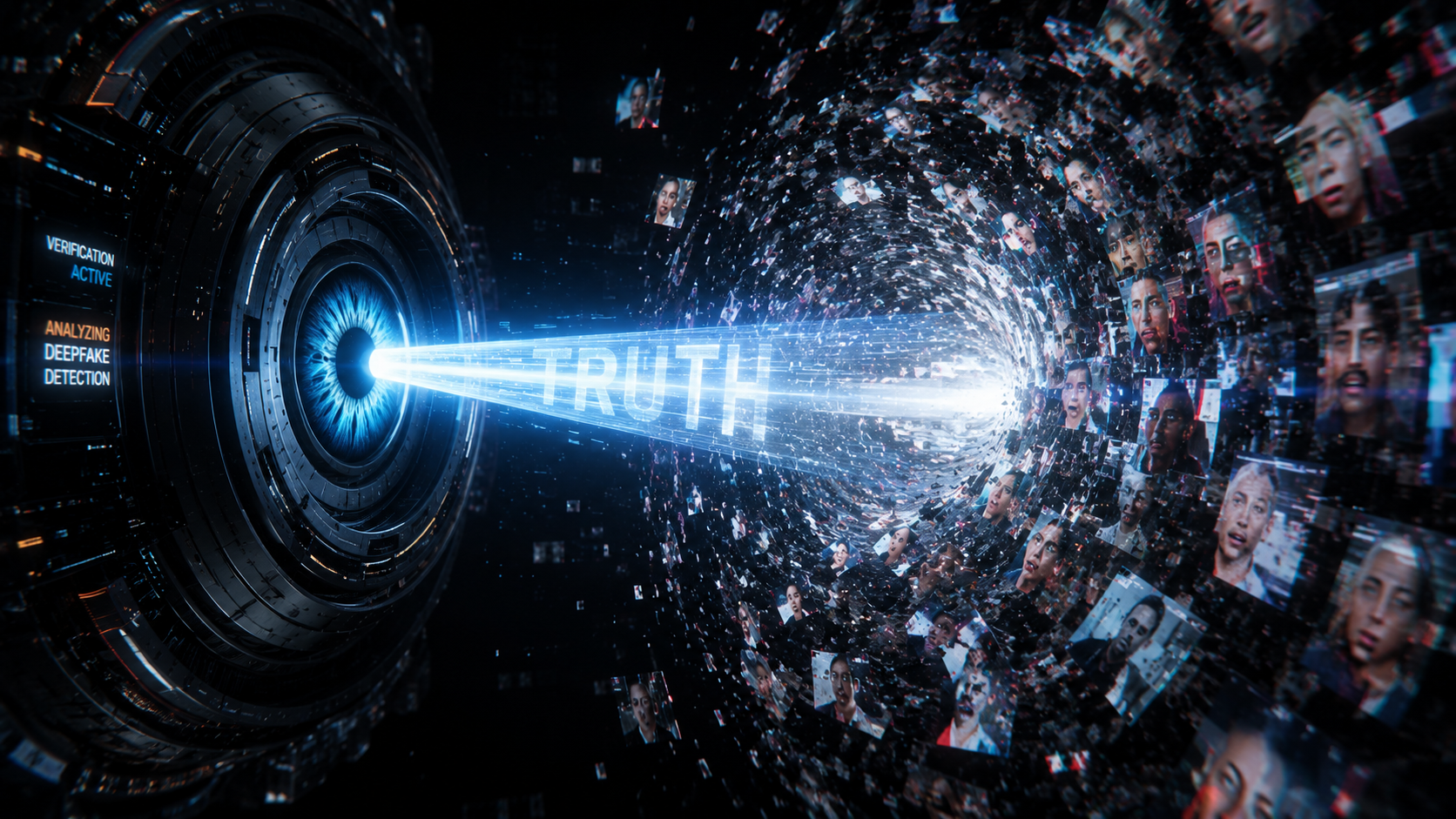
Okay, so you’ve seen the headlines, right? NVIDIA, the GPU overlords, just dropped some news that’s got everyone talking. They’ve apparently cooked up a “Synthetic Video Detector” that can spot deepfakes and AI-generated content with a whopping 92% accuracy. And get this: it analyzes 1080p footage in just 22 milliseconds. Twenty-two freaking milliseconds! That’s faster than you can blink. Sounds incredible, doesn’t it? A real game-changer. Finally, a way to fight back against the tidal wave of AI fakery. But here’s the thing: I’m not popping champagne corks just yet. Not by a long shot. We’re talking about NVIDIA here, the company whose GPUs are powering the very deepfake generators they’re now trying to detect. It’s like a pharmaceutical company selling both the poison and the antidote. You gotta wonder, don’t you?
The Catch
Let’s talk about that “92% accuracy.” Sounds impressive on paper. Most people would take 92% on a test, right? But think about it in the context of fake news and misinformation. We’re not talking about a B- here. We’re talking about truth and trust in a hyper-connected world. An 8% failure rate means that out of every hundred deepfakes, eight of ’em are slipping through the cracks. Eight perfectly convincing, politically damaging, reputation-destroying fakes. And what about false positives? What if it flags real, genuine content as fake? That’s just as bad, maybe worse. Imagine your actual reporting getting flagged because an algorithm says it’s AI-generated. The public wouldn’t trust anyone. We’ve already got enough problems with media literacy. This doesn’t help.
Make no mistake, 22ms is blistering fast. It’s truly a technical marvel. But are we seriously expecting this to stem the tide? The creators of deepfakes aren’t just going to pack up their bags and go home because NVIDIA built a detector. They’re already working on the next generation of fakes, designed specifically to bypass these kinds of tools. It’s an arms race, always has been. The detection tech will always be playing catch-up, always reacting to what the generative tech is doing. It’s like building a taller wall when you know the attackers are already developing ladders.
NVIDIA’s Role in This Mess
Here’s the thing: NVIDIA’s GPUs are the backbone of the AI boom. They’re the engines driving the deepfake factories, the text-to-video generators, the image synthesizers. Their hardware is what makes this entire problem possible at scale. So, while it’s nice they’re trying to be part of the solution, it’s also a bit… convenient, isn’t it? They’re selling you the fancy sports car, then offering to sell you the radar gun to catch other speeders. We’ve got to ask ourselves, is this a genuine effort to safeguard truth, or is it another product line, another revenue stream in the ever-expanding AI marketplace? I’m leaning towards the latter. Call me cynical, but I’ve been around the block a few times.
What Lies Ahead?
So, where does this leave us? While it’s a step in the right direction, a high-accuracy, low-latency detector isn’t a silver bullet. Not by a long shot. We’re facing an existential threat to shared reality. Who ultimately gets to decide what’s “fake” and what’s “real”? And what if this tech gets into the wrong hands? Imagine a government using this to censor dissent, labeling genuine footage as “AI-generated” to silence critics. It’s a scary thought. We’re treading on thin ice here. This isn’t just about spotting a fake celebrity cameo. This is about the very fabric of information. We shouldn’t be blindly celebrating every technical advancement without critically examining its broader implications. NVIDIA’s detector is cool, sure. But it doesn’t fix the core problem. It might just complicate it further.
Leave a Reply