
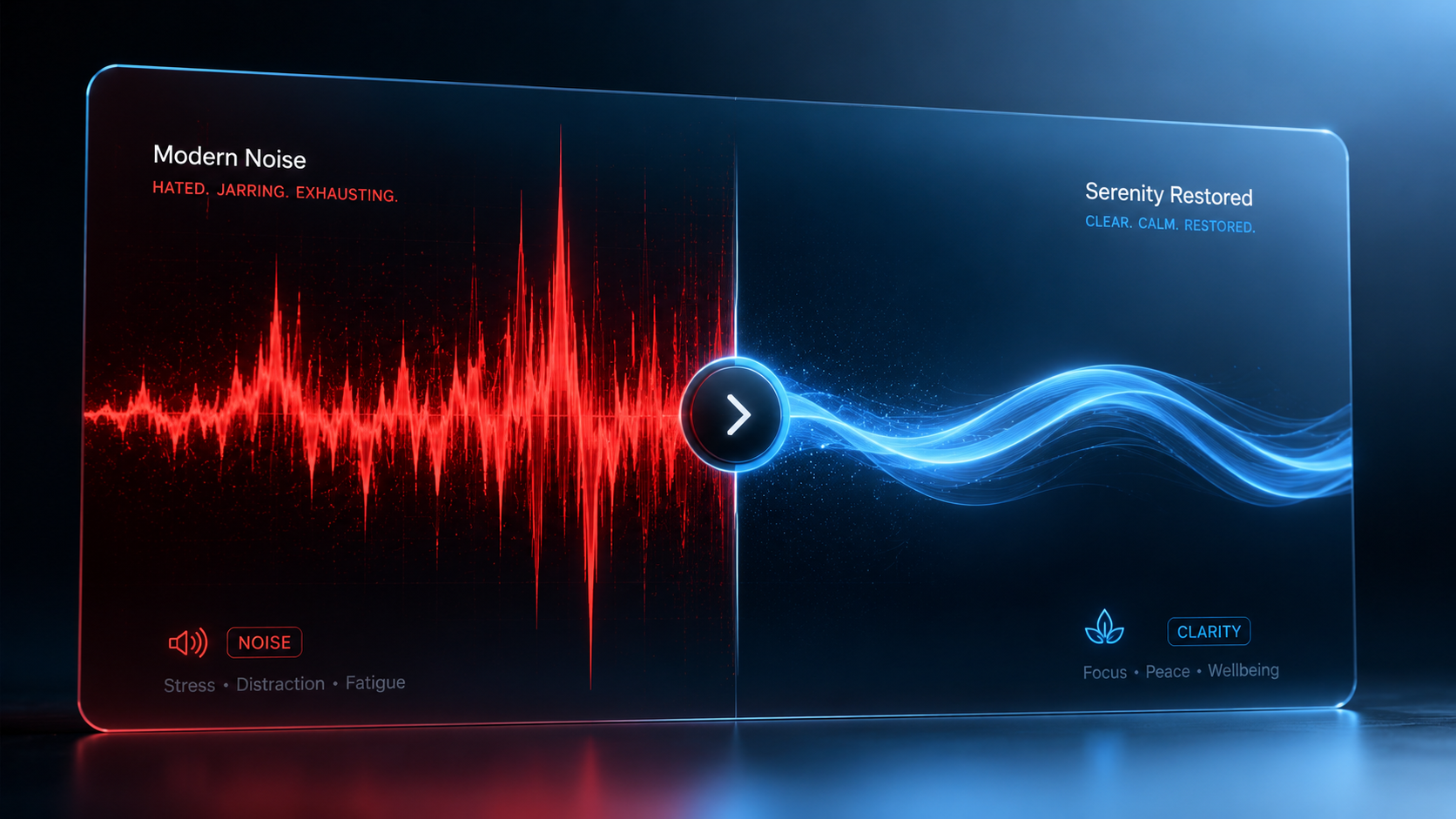
Alright, so you’ve seen the headlines, haven’t you? That catchy blurb promising salvation from sonic torment: “A Two-Person Startup Has Fixed One of the Most Hated Sounds in Modern Life.” First off, I’m calling shenanigans. Maybe not entirely, but c’mon. “Fixed one of the most hated sounds?” That’s a bold claim, folks. We’re talking about a world drowning in leaf blowers, overly loud phone conversations on public transport, and the soul-crushing drone of badly designed HVAC systems. Which one did they nail? The incessant, generic *ding!* of every notification on every device everywhere? Or maybe the screech of badly compressed audio on your Zoom calls? The article points to some breakthrough in audio tech. To be fair, if they’ve genuinely killed the scourge of cheap speaker feedback, I’ll send them a fruit basket. But here’s the thing: let’s not get ahead of ourselves.
The Hype (And The Catch)
Apparently, this tiny outfit, probably fueled by instant coffee and pure, unadulterated hubris, has developed some sort of sonic alchemy. They’ve somehow muted, massaged, or outright murdered a specific sonic annoyance we’ve all grown to despise. Think about it. That jarring *CLACK* every time someone sets down their keyboard on a conference call. Or the utterly pointless *BEEP* every time you try to turn off your microwave. They’re claiming to have made that specific annoyance… disappear. That’s impressive, sure. It’s a good parlor trick. A neat bit of engineering. A decent proof of concept, even. But let’s not pretend this is some sweeping victory over the cacophony of existence. Is it the sound? The one that keeps you up at night? Probably not.
Make no mistake, tackling even a single hated sound is no small feat. It shows ingenuity. It speaks to a deep understanding of audio engineering and a genuine desire to make things marginally less irritating. Who doesn’t want that? But we’re talking about two people. They’ve identified a very specific pain point, yes. They’ve built a solution for *that* specific pain point, and that’s commendable. What they haven’t done, however, is tackle the underlying issues: shoddy hardware design, lack of user control, or the sheer, relentless *volume* of digital noise that’s crept into every facet of our lives. They’ve put a tiny, high-tech plaster on a gaping wound.
Why This Matters (Or Doesn’t)
So, does this actually matter beyond a cool tech demo? For starters, it’s a distraction. We shouldn’t be celebrating the “fix” of one annoying sound when a hundred others are still screaming for attention. Why? Because it puts the onus on startups to fix symptoms, rather than tech giants to design better from the ground up. It lets the big players off the hook, doesn’t it? They build products that generate irritating sounds, and then we wait for some plucky duo in a garage to swoop in and save us. That’s not progress. That’s an indictment of modern product development. We deserve better. Our ears deserve better. Our sanity deserves better.
The Road Ahead (Spoiler: It’s Bumpy)
The short answer? This is a win for a very niche problem. It’s a nice story. It’s a pat on the back for clever engineering. Will it change your life? Probably not. You’ll still hear that neighbor’s dog. You’ll still get that spam call. You’ll still curse the sound of construction outside your window. This startup’s achievement is a ripple, not a tidal wave. It shows what’s possible when you focus. But let’s keep our expectations grounded. Fixing *one* hated sound is just the beginning. The real battle against modern life’s noise pollution? That’s a war, and we’ve barely won a skirmish.
Leave a Reply