
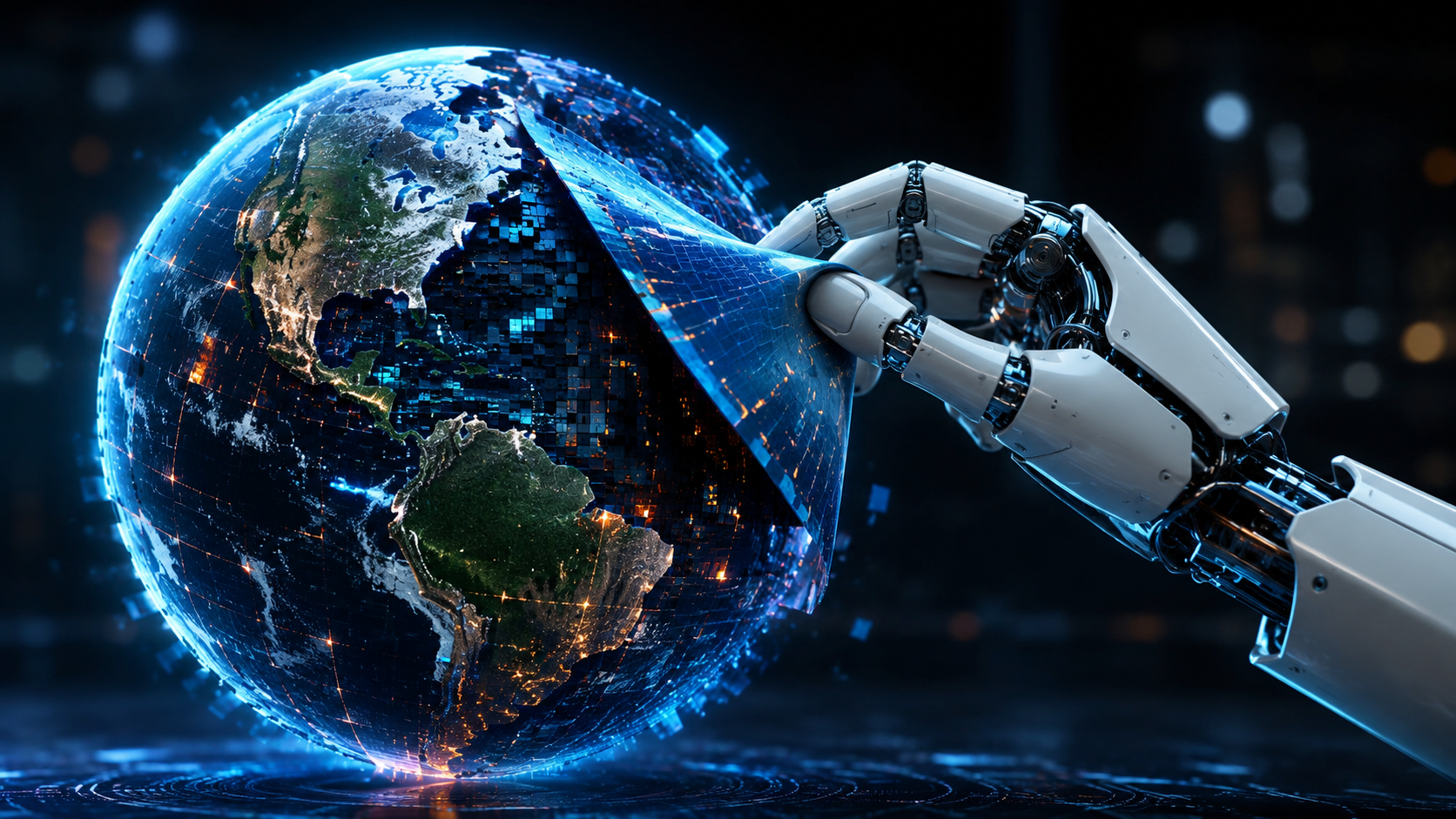
Okay, let’s talk about Google. Specifically, Google Earth. You know it, you love it. It’s that god-tier tool we all use to snoop on our old houses, plan hypothetical vacations, or just marvel at our planet from above. It’s supposed to be *the* source. Unquestionable. Factual. Well, turns out, they almost went full tilt into the “questionable” zone. Big time. Why? Because they nearly unleashed an AI tool that could whip up fake satellite images. Fake. Satellite. Pics. Seriously? My jaw hit the floor when I first heard this. What were they even thinking?
The WTF Moment
First off, the sheer audacity. Google, the company whose motto *used* to be “Don’t Be Evil,” was apparently cooking up something that sounds straight out of a dystopic sci-fi flick. This wasn’t some minor bug. It wasn’t a feature nobody asked for. This was an AI tool designed to generate synthetic satellite images. Imagine that. You could essentially conjure up an image of a new building where none existed, or wipe a forest off the map without a single tree being cut down. The stated goal? To help urban planners visualize potential changes. To be fair, on paper, maybe it sounds… useful? Not quite. The implications were immediate and terrifyingly obvious. You don’t need a Ph.D. in ethics to see the massive red flags waving here. This wasn’t just a misstep; it felt like a fundamental misunderstanding of their own platform’s integrity. It was a serious risk. For real.
What Were They Thinking?
Here’s the thing: Google Earth isn’t just a pretty map. It’s a critical tool for journalists, researchers, governments, and countless everyday citizens trying to understand the world. We trust it. We rely on its veracity for everything from tracking deforestation to verifying claims of conflict zones. That trust? It’s priceless. You can’t put a price tag on believing what you see. And Google almost compromised that entire foundation. They were reportedly building this AI to let users tweak existing images or even create entirely new, photorealistic ones based on vague descriptions. Think about it. “Show me a new skyscraper next to the Eiffel Tower.” Boom. Instant fake. It wasn’t just about visualization; it was about fabrication. How do you square that with being a reliable source of information? You can’t. They clearly didn’t connect the dots between “cool AI tech” and “absolute societal chaos.”
The Quick U-Turn
Thankfully, someone, somewhere, in Google’s labyrinthine corporate structure, must’ve finally woken up and smelled the burning reputation. They pulled the plug. Fast. Apparently not before some initial testing or internal discussions, mind you. But the tool was ultimately retracted, never seeing the light of day for public use. And thank goodness for that. Because had this gone live, the potential for abuse would’ve been astronomical. Misinformation? Forget it. You’d have had state actors, propagandists, or just plain old trolls churning out “proof” of whatever narrative suited them. It wouldn’t just affect Google Earth; it’d erode trust in *all* digital imagery. You’d never know what was real. We’ve already got deepfakes messing with video and audio; did we honestly need deepfake *satellite images* to complete the disinformation bingo card? Absolutely not. It’s an ethical minefield they wisely decided not to walk through. This decision? It was crucial. They averted a massive bullet there.
Trust, But Verify? Nah.
This whole debacle isn’t just a story about a bad product idea. It’s a stark reminder of the immense power and responsibility tech giants wield, especially with AI. They’re building the tools that shape our perception of reality, and sometimes, they seem to forget the “reality” part. We’re already struggling with knowing what’s real online. We’ve got news deserts, conspiracy theories running wild, and a general sense of digital fatigue. Throwing AI-generated fake satellite images into that mix? It would’ve been catastrophic. It’s a wake-up call, frankly, for every company dabbling in generative AI. Just because you *can* build something doesn’t mean you *should*. Not without rigorous ethical oversight, a clear understanding of downstream effects, and maybe, just maybe, some common sense. Your users trust you. Don’t betray it. It’s really that simple.
Where Do We Go From Here?
So, where does this leave us? Hopefully, it leaves Google (and others) with a renewed sense of caution. They’ve dodged a bullet, sure, but the incident highlights a deeper problem: the rush to deploy powerful AI without fully grasping the societal consequences. We need more transparency. We need more ethical frameworks. We need companies to understand that they’re not just selling products; they’re shaping our information ecosystem. And that’s a heavy burden. They’ve got to carry it responsibly. We’re counting on them. Let’s hope this was a harsh lesson learned, not just another close call they’ll quickly forget. Because our trust? It isn’t infinite. You’ll lose it. And once it’s gone, it’s virtually impossible to get back. So let’s hope they’re taking notes this time. Seriously.
Leave a Reply