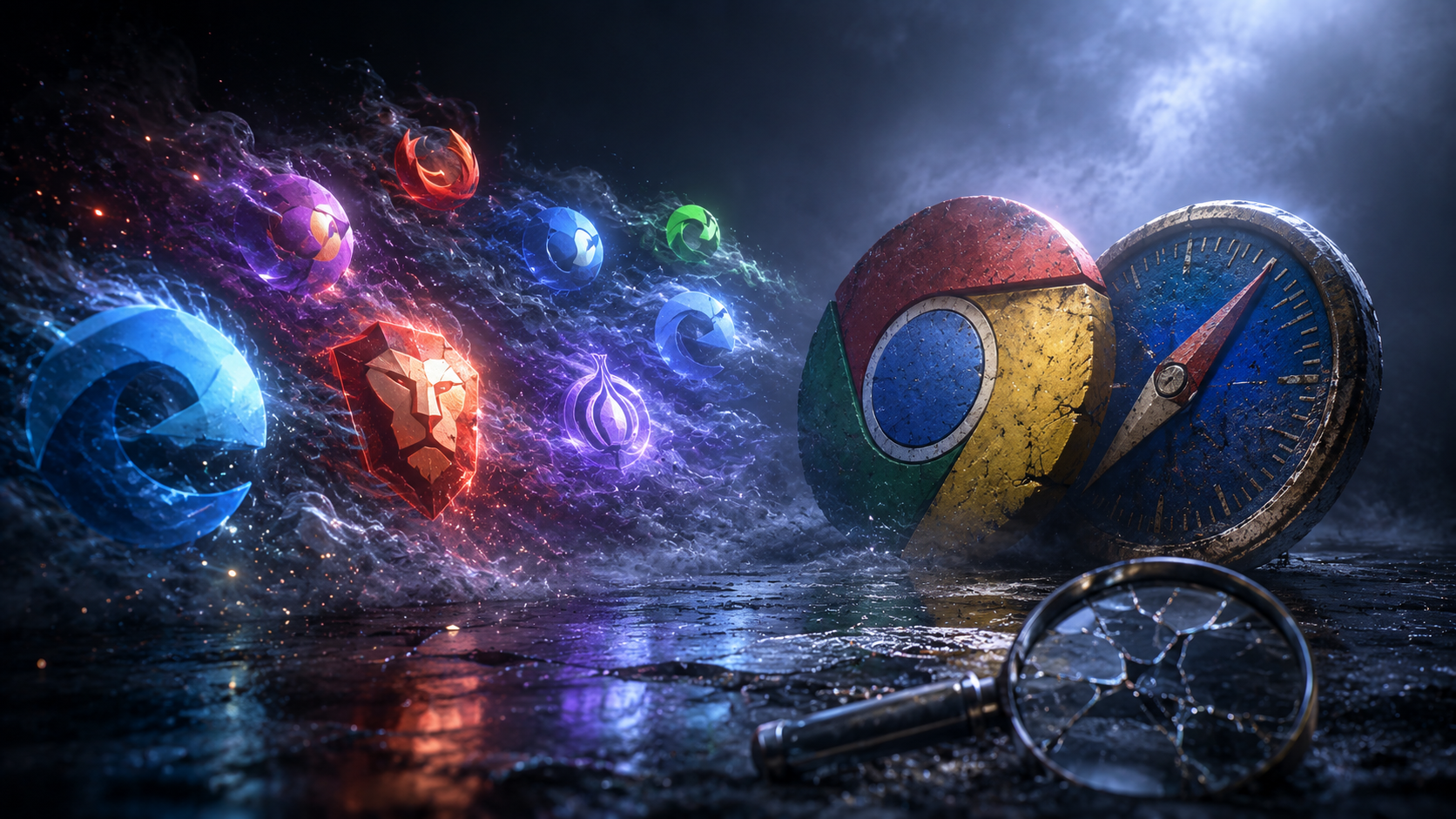
Alright, listen up. We’ve all been there. You boot up your laptop, click that familiar icon – maybe it’s the colorful pinwheel, maybe it’s the sleek compass. Chrome. Safari. For years, they’ve been our digital default. We just used ’em, didn’t we? Didn’t really think twice. But here’s the kicker: the browser wars aren’t about search engines anymore. Nope. That’s old news, a relic from a different internet. The fight today? It’s for your attention, your data, and honestly, your sanity.
First off, let’s call a spade a spade. Google Chrome isn’t just a browser; it’s a data vacuum. We all know it. Every click, every site, every search query feeds the beast. You’re not just browsing; you’re helping Google sell more ads. That’s the deal. And Safari? To be fair, Apple’s made a big song and dance about privacy. Better than Chrome? Sure, probably. But let’s be real, it’s still Apple. It’s built for *their* ecosystem, *their* services, *their* rules. You’re still on their turf. Want to shake things up? Want something that actually works *for you*, not just as a conduit for big tech’s bottom line? You’ve got options. Great ones, in fact.
Beyond the Duopoly: Real Alternatives Exist
So, you’re sick of the status quo? Good. You should be. There’s a whole world out there that isn’t just Chrome or Safari. And no, I’m not talking about some obscure Linux browser your cousin swears by. I’m talking about polished, powerful, genuinely innovative browsers that put *you* back in control. For starters, let’s talk about Brave. This thing’s a beast. Built on Chromium, so websites just work, but it comes with a built-in ad blocker and tracker blocker that actually works. Out of the box. No extensions needed. You won’t believe how fast pages load when they aren’t bogged down by a dozen trackers trying to follow your every move. It’s fantastic. You can even earn a little crypto for opting into *privacy-respecting* ads. Think about it. Pretty neat, right?
Then there’s Vivaldi. Oh man, Vivaldi. If you’re a power user, if you crave customization, this is your jam. It’s like someone looked at what browsers *could* be, rather than what they are. Tab stacking, built-in notes, screenshot tools, command chains – you name it, Vivaldi probably has it. It’s crazy customizable. You can make it look and work exactly how *you* want. No more settling for a one-size-fits-all approach. It’s a proper computer browser, not just some stripped-down app.
And let’s not forget Arc. This one’s a game-changer for a lot of folks. It’s got a completely different take on the browser UI, ditching the traditional tab bar for a sidebar that’s actually useful. Spaces, split views, built-in ‘Easel’ for quick notes – it’s less a browser, more an operating system for the internet. It takes some getting used to, sure, but once you ‘get it,’ you’ll wonder how you lived without it. It’s slick. It’s fast. It’s fresh. Make no mistake, these aren’t just minor tweaks; these are fundamentally different ways of experiencing the web.
Why This Matters More Than Ever
Here’s the thing: your browser is your window to the internet. It’s where you work, where you learn, where you shop, where you connect. Letting two companies dominate that window isn’t just boring, it’s dangerous. It stifles innovation. It centralizes power. It makes *you* a product. Switching isn’t just a tech decision; it’s a philosophical one. It’s about taking back a sliver of control in a world that constantly tries to snatch it away.
We’ve grown complacent, haven’t we? Just accepting whatever Google or Apple dishes out. Well, guess what? You don’t have to. You’ve got choices. Really good ones. So next time you’re about to open that same old browser, stop. Think about it. There’s a whole internet out there waiting to be explored differently. More privately. More productively. It’s time to ditch the defaults. You won’t regret it. Trust me.
Leave a Reply