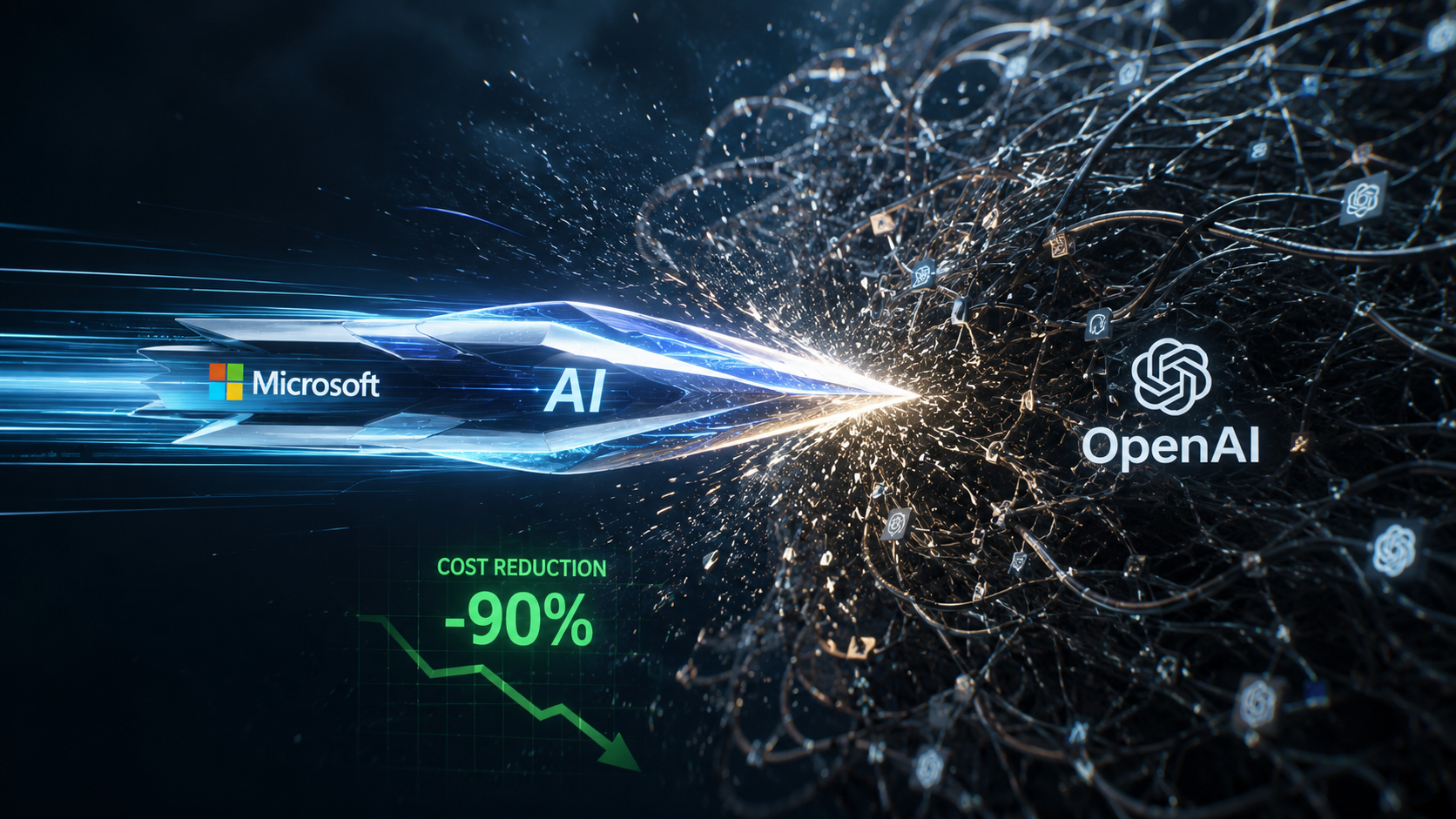
Okay, let’s talk about the latest AI chess move from Redmond. Microsoft, our benevolent AI overlords (or so they’d like us to believe), just rolled out a new suite of in-house AI models. They’re calling them “phi-3” models, and the big, juicy claim? They apparently slash costs by up to 89% compared to OpenAI’s models. Eighty-nine percent! That’s a huge number. A really, really big number. So, is this a game-changer, or just Microsoft reminding everyone who wears the big tech pants?
The Obvious Angle: Why Now, Microsoft?
First off, let’s be real. Microsoft isn’t just launching these models because they suddenly discovered a cheaper way to do things. They’re heavily invested in OpenAI, right? Billions. So why compete with their own golden goose? It’s not rocket science. Dependency stinks. No one likes being beholden to a single vendor, especially when that vendor is *also* trying to build its own products. Think about it. Microsoft wants control. They want options. And you know what else? They want to avoid any potential future drama, like, say, if OpenAI decides to go rogue or change its pricing structure drastically. This isn’t just about saving a buck. It’s about strategic leverage. It’s about hedging bets. Makes total sense, doesn’t it?
Those “Up to 89% Savings”: Let’s Unpack That
Now, about that headline-grabbing 89% cost reduction. Make no mistake, that’s a juicy number designed to make every CFO sit up straight. But here’s the thing: you’ve gotta ask, “Compared to what, exactly?” Are we talking about specific niche tasks? Specific model sizes? OpenAI’s biggest, most powerful models, or their more accessible ones? The devil’s always in the details with these sorts of claims. Microsoft isn’t dumb. They’re not going to compare their entry-level model to GPT-4 Turbo for general tasks. They’ll find the sweet spot where their specialized, smaller models outperform on cost for *specific* use cases. It’s marketing, pure and simple. It’s a “your mileage may vary” situation. Developers, you’ll need to run your own benchmarks. You totally will.
Who Benefits Here? And What About OpenAI?
So, who’s this really for? Apparently, the phi-3 mini, small, and medium models are for various enterprise tasks, from simple summarization to content generation. These smaller, more efficient models are designed to run on less powerful hardware, perhaps even locally on devices. That’s a win for edge AI and potentially for companies worried about data privacy. But here’s the kicker: this has to sting OpenAI a little. Not a lot, maybe, because Microsoft is still their biggest partner and investor. But it’s a clear signal. Microsoft is telling the world, and especially OpenAI, “We can do this ourselves. We don’t *need* you for everything. We’re building our own capabilities.” It’s a power play. A very public one. It creates competitive pressure, which, to be fair, isn’t always a bad thing for the end user.
My Take: Same Old Microsoft, New AI Wrapper
Look, Microsoft has always been about control. From Windows to Azure, they build ecosystems and then make it really hard to leave. This AI play? It’s just another chapter in that saga. They’re offering a compelling alternative, especially if you’re already deep in the Azure ecosystem. It’s smart. It’s strategic. And yeah, it’s probably a solid option for certain kinds of workloads. But don’t get swept away by the hype and those massive savings numbers without doing your homework. This isn’t a benevolent gesture; it’s a calculated move to solidify their position in the rapidly evolving AI world. OpenAI better keep an eye on their “partner,” because sometimes the biggest friends can be your fiercest competitors. It’s just how the tech game works. Always has been. Won’t ever change.
Leave a Reply