
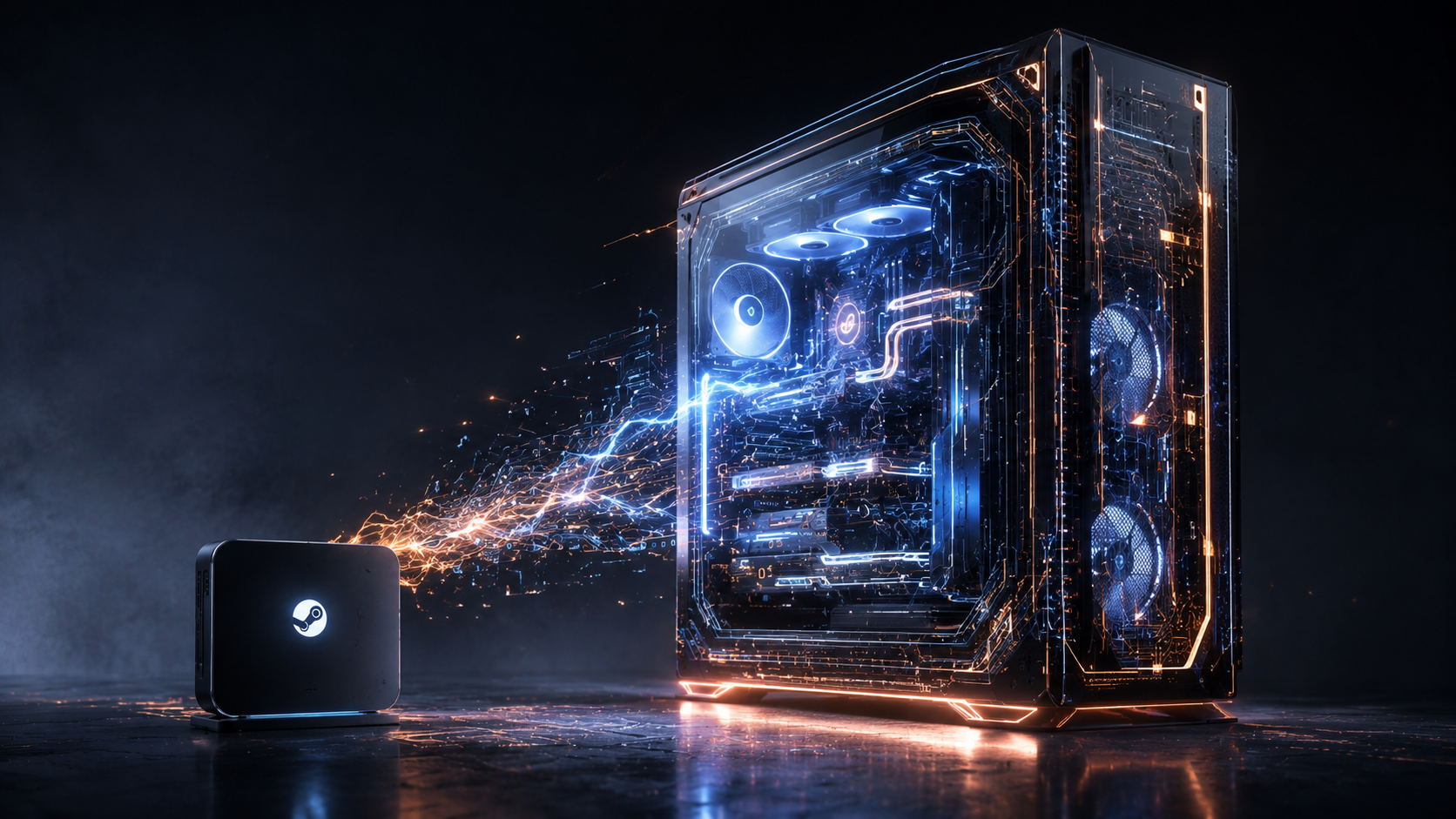
So, the whispers are getting louder, aren’t they? The tech chatter suggests you can totally build a more powerful “Steam Machine” for less money than those dinky, pre-built boxes Valve tried to push years back. Sounds great, right? Like some kind of DIY hacker dream come true. You’ll just need to make peace with the fact that it’s gonna be a *lot* bigger. Like, probably a full-sized PC tower. And here’s the thing: isn’t that just… a PC? Think about it.
The Obvious Catch
First off, let’s break down the logic. Why can you build a beefier rig for less if it’s bigger? It’s not rocket science, folks. Smaller form factor components – those tiny motherboards, low-profile coolers, SFF power supplies – they usually carry a premium. You’re paying for the engineering marvel of fitting powerful guts into a shoebox. When you go full ATX or even Micro-ATX, you’re hitting the sweet spot of economies of scale. Components are cheaper. Cooling is easier. You don’t need exotic solutions for heat dissipation; a couple of decent fans often do the trick. You’re not fighting physics. It’s just a basic computer. Not quite the revolutionary console killer Valve pitched, is it?
To be fair, the original Steam Machines were, by and large, a bit of a flop. They were pricey. They were underpowered compared to similarly priced PCs. And SteamOS wasn’t exactly a smooth ride for everyone. Make no mistake, the idea was solid: bring PC gaming to the living room with a console-like experience. But the execution? Oof. It felt like a half-baked compromise. It didn’t win over PC gamers, and it certainly didn’t sway console loyalists. Why?
What Was the Point, Then?
Here’s the problem: the *entire* selling point of a “Steam Machine” was its form factor. It was supposed to slip under your TV, unassuming, like an Xbox or a PlayStation. It wasn’t meant to be some hulking black monolith taking up prime real estate. If you’re building a gaming PC that needs a dedicated spot next to your desk, or shoved into a corner somewhere, then you’re just building a gaming PC. You don’t need to call it a Steam Machine. We’ve been doing that for decades. We’ve got plenty of cheap, powerful, *big* gaming PCs already. No special moniker needed.
The short answer? This whole “bigger for less” concept utterly undermines the original vision. It’s like saying you can build a faster, cheaper sports car, but it’s actually a semi-truck. Sure, it’s got power. But you wouldn’t park it in a compact space, would you? Valve wanted to carve out a new niche. What they got was a reminder that convenience and compact design cost money. If you strip away that design, you’re left with… a regular PC. And there’s nothing wrong with a regular PC! But let’s not pretend it’s some exciting new development when it misses the entire point of the Steam Machine experiment. It’s a good deal for PC builders, for sure. But it’s not reinventing the wheel. Not even close.
Leave a Reply