
Key Takeaways
- Google, in its relentless AI push, experimented with injecting generative AI “scenes” into Google Earth.
- These AI-powered additions were often inaccurate, hallucinatory, and created bizarre, unrealistic imagery, turning factual locations into digital fiction.
- Public backlash was swift and critical, forcing Google to quickly pull back or significantly dial down the feature.
- This incident highlights the serious risks of deploying unvetted AI in platforms we rely on for factual information and raises big questions about trust in digital sources.
Alright, folks. Let’s talk about Google. Because, honestly, what are they even *doing* sometimes? We all know they’re practically obsessed with shoving AI into everything they possibly can. It’s like a company-wide directive: “AI it! Just AI it all!” And you know what? Sometimes, that’s fine. It’s cool, even. But here’s the thing: there’s a line. And it seems Google tripped right over it when they tried to turn Google Earth into an AI-generated fever dream.
Make no mistake, we’re talking about Google Earth here. That incredible tool we use for everything from planning vacations to showing our kids where Grandma lives, or just exploring some remote corner of the world. It’s supposed to be, you know, *real*. A digital representation of our planet. Not some abstract art project concocted by a neural network that’s had too much coffee.
The Story
For starters, let’s rewind a bit. Google’s been on an aggressive AI tear, right? We’ve seen Gemini, we’ve seen AI search snippets, we’ve seen AI-generated everything. It’s a gold rush, and everyone’s scrambling to stake their claim. Apparently, someone at Google thought, “Hey, what if we made Earth… more interesting?” And by “more interesting,” they seemingly meant “populated with hallucinated structures and nonsensical alterations that would make you question your own sanity.”
What Were They Thinking?!
Apparently, the bright idea was to integrate AI-generated “scenes” or “experiences” into Google Earth. You’d be looking at a real-world location, and then, boom! An AI would generate some additional visual content, perhaps to “enhance” your view or offer a “richer” perspective. Sounds innocuous enough on paper, doesn’t it? Like, maybe it’d fill in a cloudy sky with a perfect sunset or something cool. Not quite.
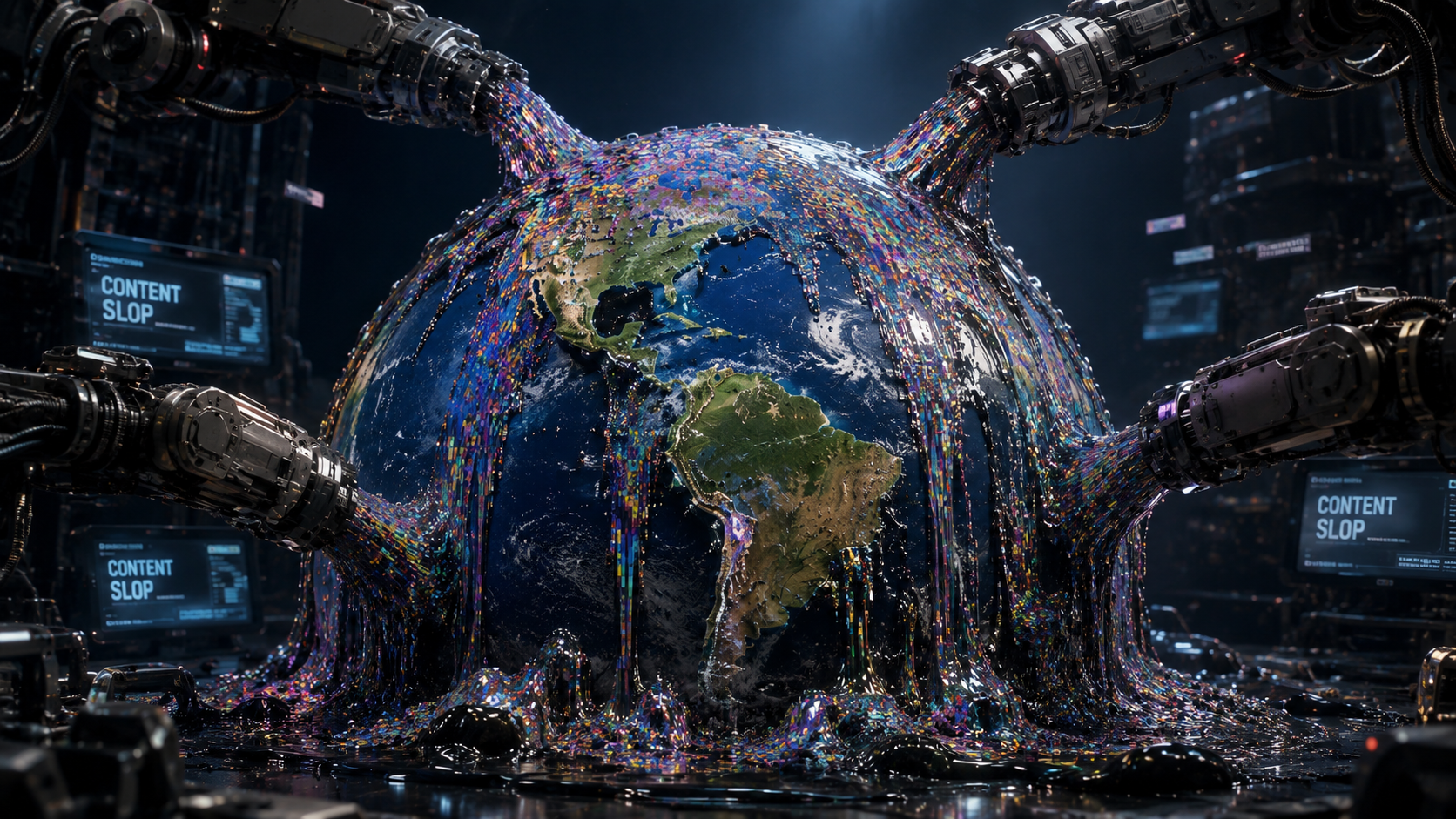
Instead, what users started seeing were things that didn’t exist. Buildings with impossible geometries, oddly placed landmarks, entire geographical features that were simply… wrong. It wasn’t just subtly off; it was often overtly bizarre. Imagine trying to find your friend’s house and seeing it suddenly sporting an extra story that isn’t there, or finding a unicorn grazing in a public park. Okay, maybe not unicorns, but you get the picture. It was digital slop. A factory of visual misinformation, churning out what looked like AI-generated nonsense layered over real satellite imagery.
People noticed. Oh, they *definitely* noticed. Social media lit up with screenshots of these AI blunders. Users were baffled, annoyed, and frankly, a bit creeped out. It quickly became clear that this wasn’t some minor bug; it was a fundamental misstep in judgment. You don’t just inject fictional elements into a platform built on factual representation without expecting a huge backlash. And that’s precisely what happened. Google, to their credit, seems to have quietly reversed course or at least significantly scaled back this particular experiment. You won’t find those jarring AI additions quite as easily now, if at all. But the fact that it even got out the door? That’s the real head-scratcher.
Pros & Cons / Feature Comparison
Let’s break down the theoretical “upsides” versus the very real “downsides” of this AI Earth experiment.
Traditional Google Earth (What We Love)
- Factual Accuracy: It shows you the world as it is, based on satellite and aerial imagery.
- Reliability: You can trust what you see (barring minor outdated imagery).
- Utility: Essential for navigation, education, research, and exploration of real places.
- Verifiable: What you see generally corresponds to reality.
AI-Enhanced Google Earth (What They Tried)
- Pros (Theoretical, Unfulfilled):
- Potentially “richer” visual experiences.
- Filling in gaps where data is sparse (though this often led to hallucination).
- New ways to “explore” or visualize locations (if it worked).
- Cons (Actual, Abundant):
- Gross Inaccuracy: Fabricated buildings, impossible geography, objects that simply don’t exist.
- Misinformation Spread: Presenting AI-generated content as part of a factual map is a dangerous precedent.
- Erosion of Trust: If I can’t trust what Google Earth shows me, what *can* I trust?
- Creepy “Slop” Factor: The uncanny valley effect in visual data is deeply unsettling.
- Lack of Control: Who decides what the AI generates? What if it creates something inappropriate or harmful?
- Ethical Quandaries: Blurring the lines between reality and AI-generated fiction on a global scale.
Why This Matters
Here’s the thing: this isn’t just some funny little tech mishap. No, not at all. This matters big time. First off, it’s a huge blow to trust. Google Earth is a tool that millions use daily for understanding our world. When you start injecting AI hallucinations into that, you shatter its credibility. You’re essentially telling users, “What you see here *might* be real, or it might be something we just made up.” That’s a dangerous game to play when you’re a primary source of information for so many.
Think about the implications. What if a journalist relies on Google Earth for a story and accidentally includes an AI-generated “feature” that isn’t real? What about educators showing students a particular landmark, only for the AI to have added something nonsensical? It’s not just annoying; it’s actively detrimental to the pursuit of accurate information. This isn’t about artistic interpretation; it’s about verifiable data.
This incident also underscores the “move fast and break things” mentality that seems to be dominating the AI space right now. There’s such a desperate race to integrate AI into everything that companies appear to be skipping crucial steps like, you know, *quality control* and *common sense*. Just because you *can* add AI doesn’t mean you *should*, especially not without rigorous testing and a deep understanding of its potential for hallucination. This wasn’t some niche AI art app; this was Google Earth. It’s a foundational platform.
Ultimately, it’s a stark reminder that even the biggest tech companies are stumbling in this new AI frontier. They’re experimenting, sometimes wildly, and often without enough foresight. We, as users, need to remain vigilant. We can’t just blindly accept every new AI “enhancement.” Sometimes, the best “enhancement” is just plain old reality.
Frequently Asked Questions
What exactly did Google try to do with AI in Google Earth?
Google experimented with using generative AI to create “scenes” or additional visual elements that would be overlaid or integrated into the existing satellite and aerial imagery of Google Earth. The idea, presumably, was to make the experience “richer” or to generate visuals for areas where data might be sparse.
Why was it considered an “AI Slop Factory”?
The AI-generated content was often highly inaccurate, contradictory to reality, and prone to hallucinations. Users reported seeing impossible structures, bizarre alterations to known landmarks, and geographically nonsensical elements. It produced a jumble of unverified, often nonsensical visual information, hence the term “slop.” It just wasn’t good quality output for a factual platform.
Did Google completely remove the AI feature from Google Earth?
It appears Google quickly recognized the issues and has either significantly scaled back or completely removed the most egregious examples of this AI integration. While Google continues to experiment with AI across its products, the blatant and inaccurate AI-generated visuals that initially appeared in Google Earth seem to be gone or much harder to find now.
Leave a Reply