
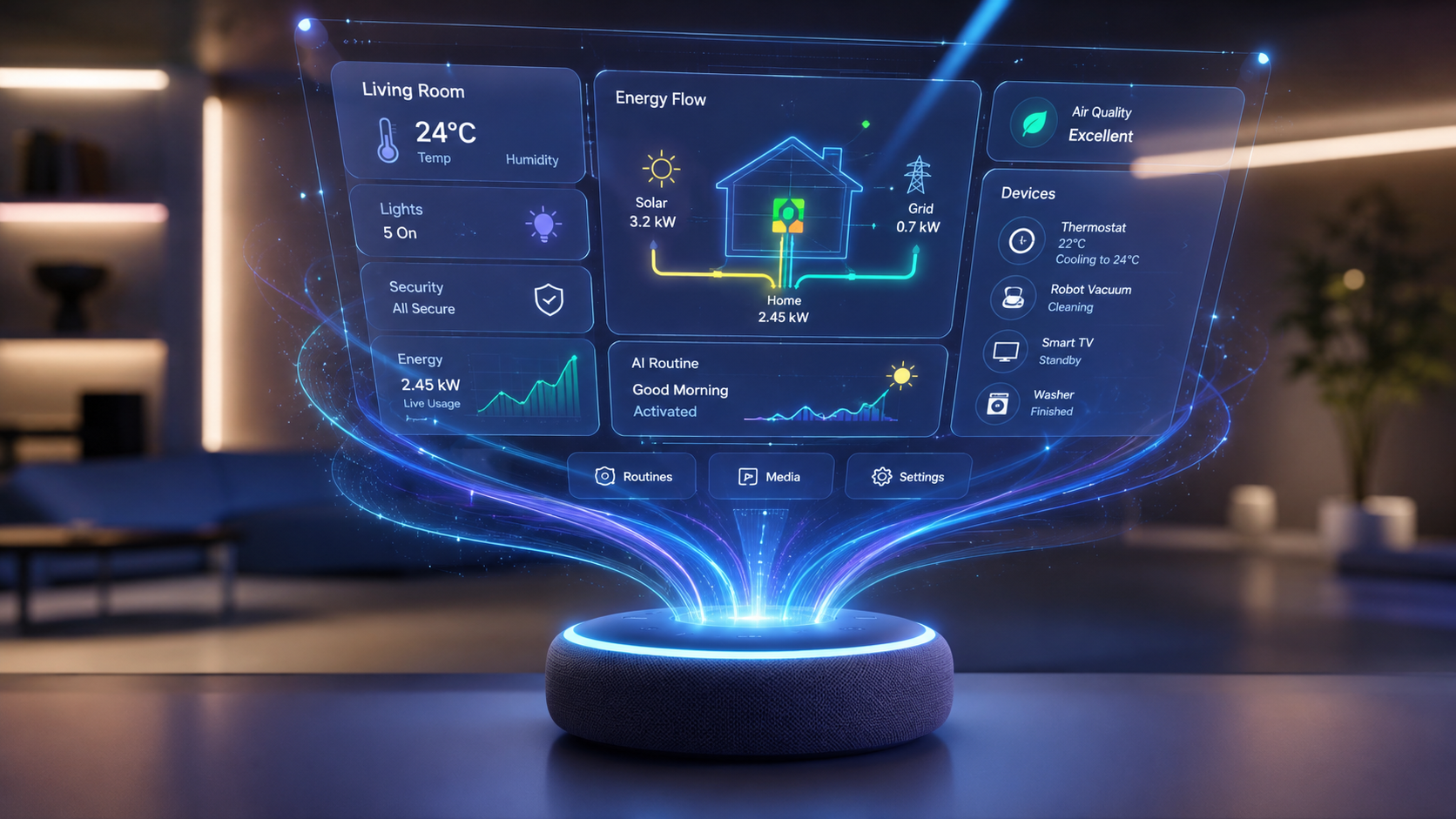
Okay, let’s talk Google Home Displays. Or Nest Hubs, whatever they’re calling them these days. Remember when the original Google Home speaker dropped? That little fabric-covered air freshener looking thing? It had a job. A clear one. It was your voice assistant. Your smart home controller. Your kitchen timer. It played music. It made sense. It was a speaker, plain and simple. It didn’t try to be anything else. And for a while, it was pretty damn good at it.
The Display’s Dilemma
But then came the display. And that’s where things got… messy. Seriously, what is a Google Home Display supposed to be now that the speaker has paved the way? It’s not just an Assistant with a screen strapped on. At least, it shouldn’t be. But here’s the kicker: for far too long, that’s exactly what it felt like. A glorified digital photo frame that sometimes showed you YouTube videos. Useful? Yeah, kinda. Essential? Not really. It just sits there. Waiting. For you to ask it something. Like it’s shy or something.
Make no mistake, the voice-first interaction is still fundamental. That’s what Google built. We get it. But slapping a screen on it doesn’t automatically elevate the experience if the screen doesn’t pull its weight. If it doesn’t do something fundamentally different. And that’s where Google’s been dropping the ball. Big time.
What It Is (And Isn’t) Right Now
For starters, right now it’s often a pretty decent kitchen companion. Recipes pop up. Timers are visible. You can watch cooking shows. Great. It’s also a video call portal. Kinda. If everyone you know is on Google Duo, that is. It displays your photos. Nice. It controls your smart home widgets. Barely. But it’s not truly proactive. It’s not a true hub. Not in the way it could be. It isn’t pulling its weight, is it? Apparently not.
It’s not a tablet. You can’t just pick it up and walk around with it. It’s not really a dedicated media consumption device, either. The speakers are often mediocre, the screen sizes are small, and let’s be honest, you’ve got a phone or a tablet already. So, what’s its actual, core identity? What’s its superpower? It’s missing something. A unique hook. A reason to exist beyond being a bigger, screenier version of the speaker. It needs more. Way more.
No, Really, What Should It Be?
To be fair, I don’t envy the product managers trying to figure this out. The space is crowded. But here’s the thing: Google’s got the data. It’s got the ecosystem. It should be able to define a new category, or at least perfect an existing one. It needs to evolve beyond just “a speaker with a screen.” It should be the true command center for your entire smart home. Not just a portal, but an intelligent portal. A brain. Something that anticipates, not just reacts.
Think about it. Why isn’t it better at displaying contextual information without being asked? Why isn’t it more deeply integrated with my calendar, showing me my next appointment when I walk into the room? Or my daily commute without me having to prompt it? Why doesn’t it learn my routines and offer proactive suggestions? It could be so much more. It absolutely could.
My Wishlist (Because Why Not?)
First off, a battery. At least on the smaller models. Make it semi-portable. Let me take it from the kitchen to the patio for music or a quick video call. Second, a much deeper, customizable smart home dashboard. One that lets me manage and monitor everything visually, not just through voice. Think real-time camera feeds, thermostat controls, light scenes, all accessible with a quick glance or tap. It shouldn’t be buried. Never.
Third, make it smarter about anticipating my needs. If my calendar says I’m presenting tomorrow, maybe it surfaces relevant news or reminds me to charge my laptop. If it’s dinner time, it could suggest a playlist or even a recipe based on what it knows I like. It needs to stop being a passive listener and start being an active, helpful presence. It shouldn’t just be there. It needs to do more. It deserves better. We all do. C’mon, Google. You’ve got this. Or do you?
Leave a Reply