
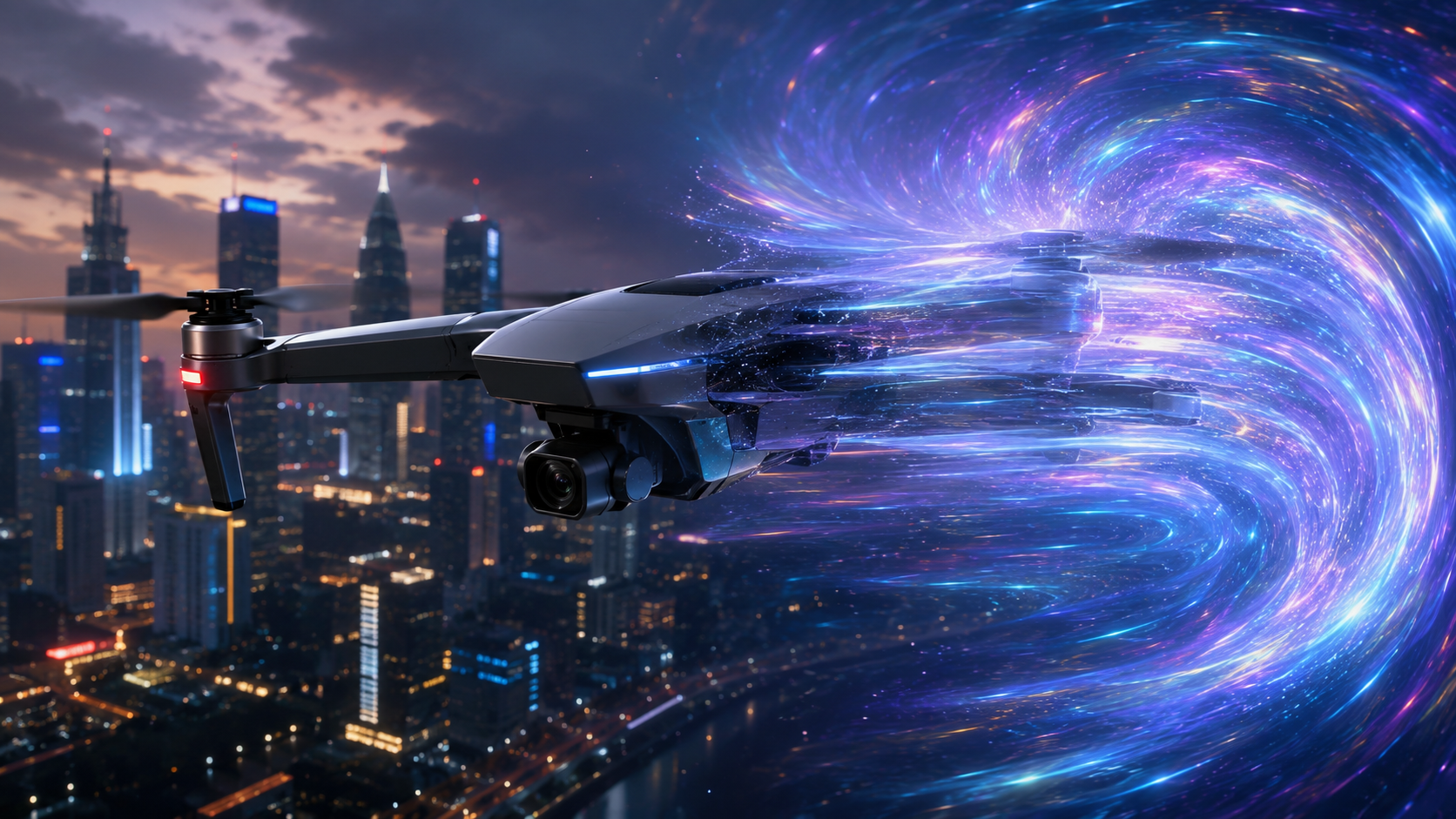
Okay, so everyone’s buzzing about the new ‘Phantom Twist’ drone. You’ve probably seen the headlines. “Vanishes in plain sight!” “Harnesses motion blur!” Sounds like something right out of a sci-fi flick, doesn’t it? Like, finally, we’re getting actual cloaking devices. Neat trick. But here’s the thing. Let’s pump the brakes on the magic talk, okay? We’re talking physics here, not Harry Potter. Make no mistake, it’s a clever bit of engineering. A really clever bit. But “vanishing”? Not quite.
The So-Called Vanishing Act
First off, what’s the big deal? The Phantom Twist works by spinning its entire body at ridiculous speeds. We’re talking rapid rotation. This creates a motion blur effect, optically blending the drone with its background. So, when you look at it, your eyes don’t quite register a solid object. It’s more of a hazy streak. Or maybe a shimmering distortion. It’s an optical illusion, really. And it’s brilliant in its simplicity. You can’t deny that. Imagine the possibilities! For certain applications, anyway. But does it actually disappear? Nope. Not even close. You’re still seeing *something* there. Just not a clearly defined drone shape. Think about it. Have you ever tried to photograph a spinning fan? You don’t get a clear image of the blades, do you? You get a blur. A transparent, ghostly blur. That’s what they’re banking on here. And for casual observers? It might just work.
But There’s Always a Catch, Right?
My take? This is a visually sneaky drone, not an invisible one. For starters, drones are loud. Really loud. No amount of visual trickery is going to silence those whining propellers. You’ll hear it coming. Or going. So, good luck with any kind of stealth operation when it sounds like a swarm of angry bees. And what about obstacle avoidance? If the drone itself is a blurry mess, how’s it supposed to accurately perceive its surroundings without advanced sensors that add weight and complexity? It’s a design paradox. Plus, this whole motion blur thing is highly dependent on viewing conditions. Bright daylight? Sure, maybe a good effect. Overcast? Different story. And don’t even get me started on what happens when a high-resolution camera with a fast shutter speed gets pointed at it. Poof. Your “invisible” drone is suddenly crystal clear. You can’t fool every lens, buddy. You just can’t.
Who’s This Really For?
So, who’s buying this? Spies, I guess? Maybe military reconnaissance? But even they want actual stealth, not just visual obfuscation that only works sometimes. We’re already seeing privacy advocates getting their knickers in a twist. And they’ve got a point. Easier to hide surveillance drones? That’s not a fun thought. For the average consumer? It’s a novelty. A really expensive novelty, I’m sure. I mean, “Look, kids! My drone *almost* disappears!” That’s not quite the selling point they’re pushing, is it? It’s a cool party trick, perhaps. But it’s not some game-changing leap in drone tech. Not yet, anyway. We’ve seen similar optical illusions before. This isn’t groundbreaking. It’s just… well, a spin on an old idea.
Don’t Fall For The Hype
Here’s the bottom line: The Phantom Twist is undeniably clever. It’s an interesting application of optics and physics. And the engineers deserve a nod for thinking outside the box. But let’s be real. Marketing departments love to slap “invisible” on anything that’s mildly difficult to spot. This isn’t true invisibility. It’s a visual distortion field. A very effective one, mind you. But you won’t be losing sight of it completely. You’ll still know it’s there. You’ll hear it. You’ll see a smudge. You’ll definitely see *something*. So, let’s appreciate the innovation, but let’s not get carried away with the hype. Your skies aren’t about to fill with actual ghosts. Just blurry drones. Don’t worry about it too much.
Leave a Reply