
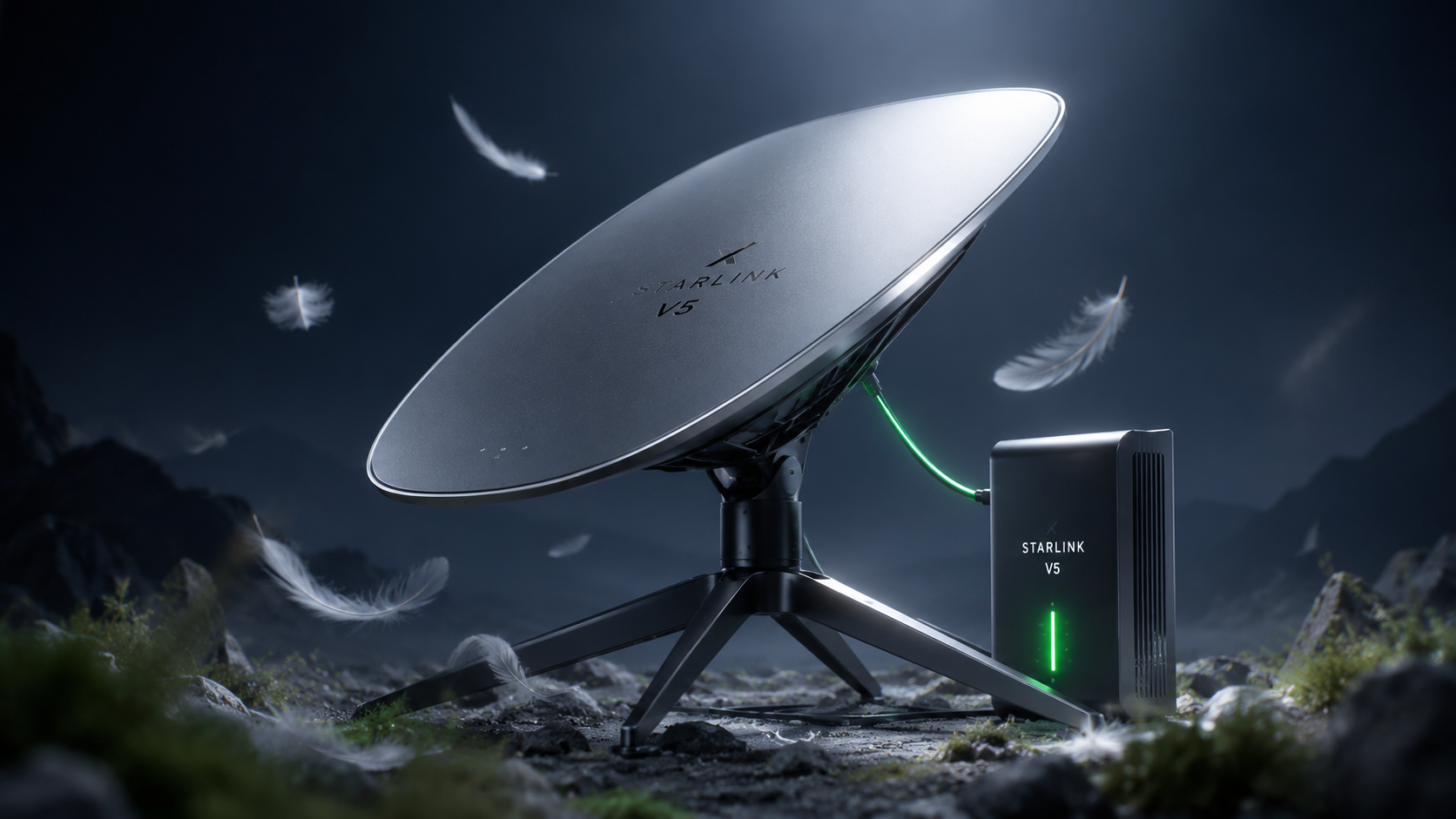
Alright, folks, let’s rip into Starlink’s latest hardware refresh, the much-talked-about V5 dish. You’ve probably seen the buzz. Everyone’s chattering about a new design, sleeker, lighter. Sounds great, right? A shiny new toy from Elon’s internet empire. But here’s the thing: if you’re holding your breath for some groundbreaking speed boost, some quantum leap in performance? You’ll be turning blue. Don’t bother. The short answer? It’s not happening.
What’s Actually New? And Why It’s… Meh.
First off, let’s be real. This V5 dish, affectionately (or maybe cynically) dubbed the “Standard Actuated” dish now, isn’t some next-gen marvel that’s gonna blow your socks off with gigabit speeds. Nope. What it does bring to the table is a notable reduction in power consumption and weight. We’re talking about it pulling around 75-100W, down from the V2’s 75-100W *average*, with peaks hitting 150W. The new one apparently peaks lower, too. And it’s lighter. Definitely lighter. That’s cool, I guess. It also looks different, more of a rounded rectangle than the classic oval. Aesthetics? Sure. Performance? Not so much.
Think about it. Why the focus on less power and less weight? Because Starlink isn’t just for fixed home installations anymore, is it? We’re seeing it everywhere – RVs, boats, overlanding setups. For those folks, every watt saved, every pound shed, matters. A lot. It means longer battery life, easier mounting, less strain on their mobile setups. So, for the mobile crowd, this is actually a pretty sweet upgrade. For anyone else, though, sitting comfortably at home, enjoying their current V2 or even V3 speeds? You’re not missing a thing. You won’t see a speed indicator magically jump. You won’t download that game any faster. It’s just not built for that.
The Elephant in the Room: Still Overloaded?
Here’s the catch. Starlink’s biggest challenge isn’t dish design anymore. It’s network congestion. It’s too many users in too many cells, all trying to pull data from a finite satellite capacity. No matter how sleek your dish looks, no matter how little power it sips, it can’t conjure more bandwidth out of thin air. You’ve seen the complaints, right? Speeds dropping during peak hours. Latency spikes. These are network issues, plain and simple. Not dish issues. So, while the V5 is a smart move for mobile applications, it’s a bit of a distraction from the bigger picture for many home users.
To be fair, making the dishes more efficient helps Starlink cut costs on their end too, potentially. Cheaper to manufacture, cheaper to ship. That’s good business. But for us, the consumers, especially those of us who bought into the promise of blazing fast rural internet? We’re still waiting for those “blazing” speeds to become consistent, especially when the neighborhood kids are all online after school. Don’t misunderstand. Starlink’s still a game-changer for millions. It truly is. But a new dish that’s just lighter and sips less juice? It’s not solving the core problem. We need more satellites, more ground stations, and better network management. That’s where the real magic happens.
What Lies Ahead? My Unvarnished Take.
So, should you rush out and get a V5? If you’re an RVer, a boater, someone constantly on the move and reliant on off-grid power, then yeah, it’s probably worth looking into. It’s a definite improvement for your specific use case. But if you’re a static home user, already running a V2 or even the older circular dish? Save your money. You won’t get a performance bump. Don’t expect one. SpaceX knows its market segmentation. They’re refining their hardware for specific niches, which is smart. But let’s not pretend this is some massive leap forward for raw speed for the average Joe. It isn’t. It’s just Starlink getting leaner, not necessarily meaner in terms of throughput. We’ll have to wait for the actual satellite constellation to catch up. And that, my friends, is a much bigger project than a dish redesign.
Leave a Reply