
Key Takeaways
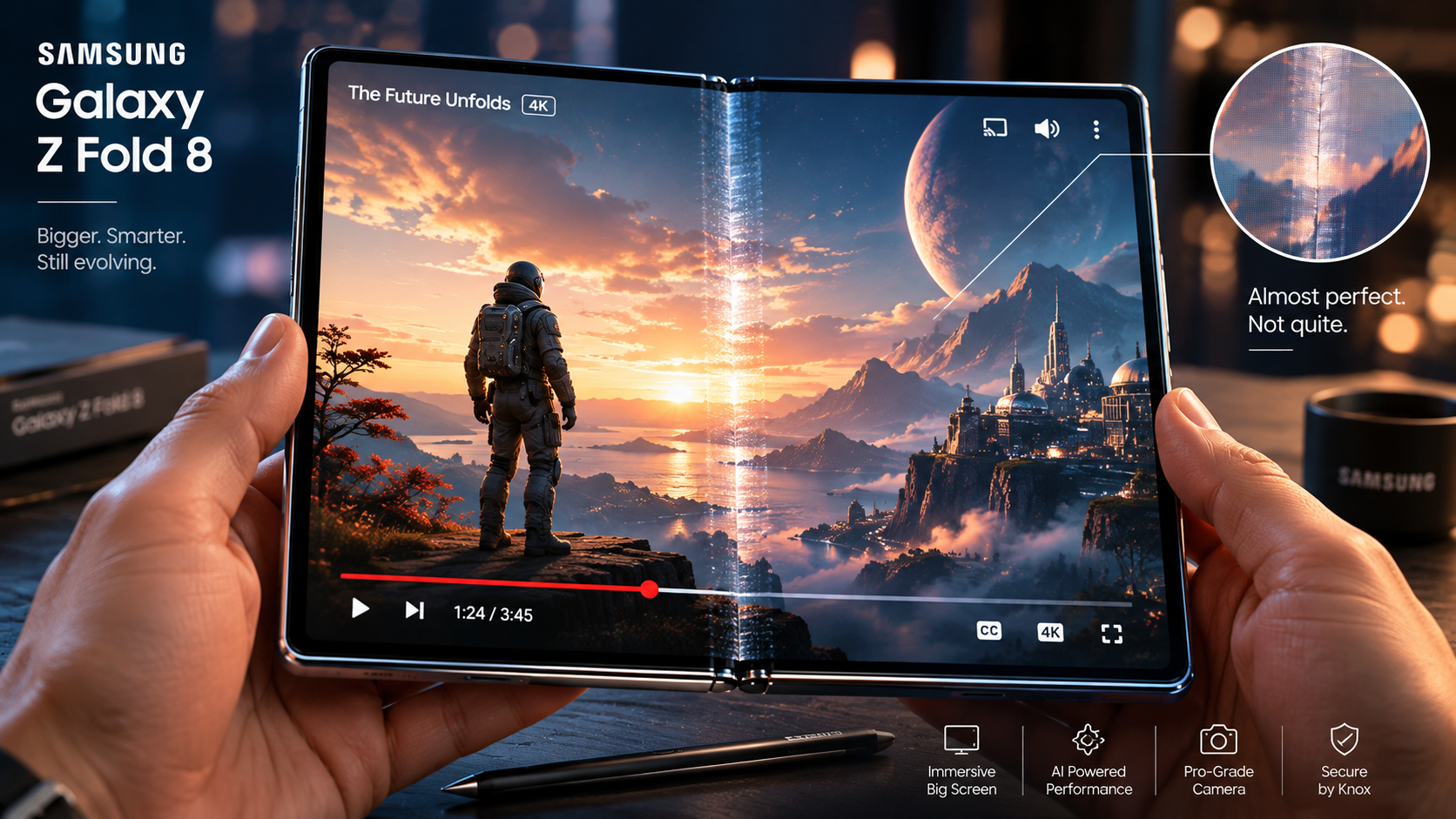
- Samsung’s marketing for the Galaxy Z Fold 8 insists it’s “perfect” for “full-screen” video.
- That’s a bold claim, and frankly, it doesn’t hold up. The device’s aspect ratio means black bars for most content.
- You’re often better off watching video on a standard slab phone, a tablet, or even the Z Fold’s smaller cover screen.
- This feels like a desperate attempt to justify the Fold’s existence beyond its niche productivity features.
The Story
First off, let’s talk about Samsung. We’ve gotta give ’em credit, right? They’re out there, pushing the envelope with foldables. They didn’t just try; they *defined* the category. But sometimes, even the biggest players get a little… ahead of themselves. A little too enthusiastic with the marketing jargon. And that’s exactly what’s happening with their latest talk about the upcoming Galaxy Z Fold 8.
They’re reportedly claiming the Z Fold 8 is “perfect” for “full-screen” video. Let that sink in. “Perfect.” For “full-screen” video. On a device known for its quirky aspect ratio and a very visible crease down the middle. My eyebrows just did a triple backflip. Seriously, Samsung? Are we even looking at the same device?
Think about it. What does “full-screen” video even mean to most of us? It means you hit play on Netflix, YouTube, or whatever, and that glorious content fills your entire display, edge-to-edge. No wasted space. No annoying black bars. Just pure, unadulterated visual immersion. That’s what a good viewing experience is all about. It’s why we love those cinematic aspect ratios on our TVs and even our regular phones.
But here’s the catch. The Z Fold series, and presumably the Z Fold 8, rocks an internal display that’s pretty darn square when unfolded. We’re talking something like a 5:4 or 6:5 aspect ratio. Most videos? They aren’t shot in 5:4. We’re living in a 16:9, 18:9, or even 21:9 world for movies and TV shows. What does that math tell you? It means black bars. Big, chunky black bars. On the top and bottom, or maybe even on the sides, depending on how you hold it. So much for “full-screen” perfection, huh? It’s just not gonna happen.
The Squarish Problem
You see, Samsung’s Folds are incredible for productivity. You can run two apps side-by-side like a mini tablet. You can draft emails, scroll through social media, and reference documents all at once. That’s its superpower. But video? That’s not its game. It never has been, and it won’t magically become its game just because someone in marketing says so.
The internal screen’s aspect ratio works brilliantly for web browsing, reading, and specific tablet-optimized apps. It gives you more vertical screen real estate, which is fantastic for endless scrolling. But when you fire up a blockbuster movie trailer, you’re immediately hit with the reality: that giant, expensive screen is now mostly black borders around a smaller-than-it-should-be video.
And let’s not even get into the crease. Yeah, they’re getting better. Less visible. But it’s still there. You’re telling me that a subtle line down the middle of your “perfect full-screen” video isn’t going to be distracting? Come on. It’s a small detail, sure, but when you’re talking “perfection,” those small details absolutely matter. We’re paying top dollar for these things, we’re not just settling.
Pros & Cons / Feature Comparison: Z Fold 8 for Video
- Pros:
- Large Screen Real Estate: It *is* a big screen, no denying that. The sheer physical size is impressive.
- Portability: You’ve got a tablet-sized screen that folds down to a phone size. That’s convenient for *carrying* it.
- Premium Display Tech: Samsung’s displays are typically gorgeous, with vibrant colors and deep blacks. When the content *does* fill it, it looks great.
- Cons:
- Awkward Aspect Ratio: The biggest killer. Most videos will have significant black bars, negating the “full-screen” claim.
- The Crease: Still present, still visible, and undeniably a distraction in the middle of your immersive content.
- Weight & Bulk: It’s a heavy, thick device. Holding it up for extended video viewing can be tiresome.
- Battery Life for Media: While decent for a foldable, heavy video consumption on that large screen will drain it faster than a smaller phone.
- Price Tag: You’re paying a premium for a folding mechanism that doesn’t inherently enhance video watching.
- Cover Screen Often Better: Ironically, the narrower, more traditional aspect ratio of the *cover screen* is often better suited for quick video playback without huge black bars.
Why This Matters
Why does this specific claim bug me so much? Well, it’s not just about technicalities. It’s about honesty in marketing. And it’s about setting realistic expectations for consumers who are shelling out serious cash – we’re talking two grand, minimum – for these devices. When Samsung says “perfect” for “full-screen” video, they’re creating an image that simply isn’t true for the vast majority of video content out there.
It matters because it highlights a continuous struggle for foldables. Manufacturers like Samsung are brilliant at making the tech work. But they still haven’t quite cracked the code on the “killer app” or the truly compelling use case that makes *everyone* want a foldable. Productivity? Sure, for some. Gaming? Maybe, but that crease. Photography? Not really. Video? Absolutely not.
This feels like a stretch, an attempt to grab a new selling point for a device that already has its niche. It’s like trying to sell a sports car as a fantastic cargo hauler. Can it technically haul *some* cargo? Yeah. Is it *perfect* for it? No way. You’re buying it for speed, not hauling. The Fold’s strengths lie elsewhere.
We’ve seen this play before. Companies try to force a feature or a use case onto a device where it doesn’t naturally fit. It confuses consumers. It builds unrealistic hype. And ultimately, it just makes the product look less appealing when the reality doesn’t match the promise. We’re not stupid. We can see the black bars. We can see the crease. We know what “full-screen” actually looks like. Let’s just be real about what these amazing, but imperfect, devices can actually do. The Z Fold 8 will be an engineering marvel, no doubt. But for video? You’d be better off with a $300 slab phone, or even a cheap tablet. And that’s the truth.
Frequently Asked Questions
Q: So, is the Galaxy Z Fold 8 completely unusable for watching videos?
A: No, it’s not unusable. You *can* watch videos on it, and the screen is large and vibrant. But it definitely isn’t “perfect” for “full-screen” video. You’ll almost always have significant black bars due to the aspect ratio, and the crease can be a minor distraction. It just won’t be the immersive, full-screen experience that Samsung is hinting at.
Q: Why would Samsung make this claim if it’s not true?
A: Marketing, pure and simple. They’re trying to broaden the appeal of the Z Fold series and find new reasons for people to justify its high price tag. Video consumption is a huge part of how people use their phones, so framing the Fold as excellent for it is an attempt to tap into that market, even if the reality doesn’t quite line up with the buzzwords.
Q: What *is* the Galaxy Z Fold 8 good for, then?
A: The Z Fold devices truly shine in productivity. Their large, unfolded screen is fantastic for multitasking, like running two apps side-by-side, or for reading documents and web pages with more vertical space. It’s also great for power users who want a phone-sized device that can transform into a mini-tablet for serious work on the go. Just don’t buy it solely for its supposed video prowess.
Leave a Reply